
Sep 22nd 2026
How to Label Wires Properly for Easier Maintenance and Identification
Identifying wires can become difficult when many cables are installed close together or serve different purposes. Clear identification helps make it easier to understand which wire is which during maintenance, installation, or inspection. Proper labeling also keeps identification information with the cable instead of relying on memory or separate notes.
For this reason, wire labels can be an important part of organized cable and wire marking. LabelMax provides heat-shrink wire and cable sleeves designed for permanent identification, with features that support clear, durable marking for electrical and datacom needs.
Why Proper Wire Identification Matters
When several wires run through the same area, identifying an individual cable can take unnecessary time if there is no clear marking. Readable wire labels give each wire a visible point of identification, making it easier to distinguish one cable from another.
Proper identification is especially useful when wires need to be checked or maintained later. Instead of trying to trace a cable based only on its position, the information printed on the sleeve can provide a direct reference.
Good wire identification should focus on three basic qualities:
- The marking should be easy to read when the cable needs to be identified.
- The label should stay with the wire rather than becoming separated during normal handling.
- The identification should remain clear over time.
Using a suitable marking method can help keep these qualities consistent across cable installations.
Choose a Suitable Wire Marking Format
The type of marking used can affect how easily a wire can be identified and how well the marking remains in place. LabelMax offers polyolefin heat-shrink wire and cable sleeves for datacom and electrical identification.
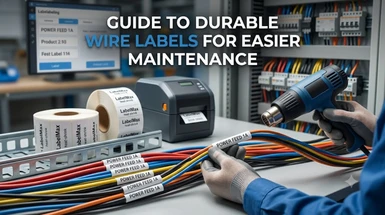
These sleeves use a pre-cut ladder style that keeps output markers together on a single sheet. This design allows the markers to remain organized before installation, which can make the labeling process easier to manage.
The sleeves are also designed to allow custom text to be printed directly onto the shrink tube. Once the required information has been printed, heat is used to install the sleeve on the wire. This approach combines the printed identification with the cable itself, rather than requiring a separate identification piece to remain nearby.
Prepare the Identification Before Installation
Before installing a label, decide what information is needed to identify the wire clearly. The goal should be to provide enough information for recognition without making the marking difficult to read.
A consistent approach can also make multiple wires easier to distinguish. When several cables require identification, preparing the required markings before installation can help keep the process organized.
LabelMax's pre-cut ladder-style sleeves are designed to retain the markers on one sheet. This allows printed markers to remain together before they are installed, helping reduce the need to handle individual sleeves separately.
When preparing markings, consider the following:
- Use custom text that directly identifies the cable.
- Keep markings consistent across wires that belong to the same installation.
- Make sure the printed information is clear before installing the sleeve.
- Keep the prepared markers organized until they are ready for installation.
Taking these steps can make the actual installation process more straightforward.
Install the Sleeve Correctly
After the required information has been printed, the heat-shrink sleeve is installed using heat. The sleeve is designed to shrink around the wire, creating a close fit.
LabelMax's sleeves have a 3:1 heat-shrink ratio and are intended to fit snugly around the cable. This design supports both permanent identification and insulation protection.
The installation process can be understood in a few basic steps:
- Select the appropriate sleeve for the wire being identified.
- Print the required custom text directly onto the sleeve.
- Position the sleeve correctly on the cable.
- Apply heat to shrink the sleeve into place.
- Check that the sleeve is securely fitted and that the identification remains readable.
Following a consistent process helps ensure that each marked cable is identified in the same clear manner.
Check the Label After Installation
Installing a sleeve is not the final step. It is also important to check the finished marking after the sleeve has been installed. The printed information should remain visible and easy to recognize. The sleeve should also fit snugly around the wire so that the identification stays associated with the cable.
LabelMax's heat-shrink sleeves are designed to provide permanent identification, while their smudge-proof and fade-resistant properties support the appearance of the printed marking.
A simple post-installation check can include:
| What to Check | Why It Matters |
|---|---|
| Printed text | The wire should be easy to identify from its marking. |
| Sleeve position | The marking should remain associated with the correct cable. |
| Fit around the wire | The sleeve is designed to shrink snugly around the cable. |
| Overall appearance | Clear, readable identification supports easier future maintenance. |
Checking each marking after installation can help catch identification issues before the cables are put into regular use.
Consider the Conditions Around the Cable
The conditions around a wire can affect the type of identification material that is suitable. For this reason, the characteristics of the marking sleeve should be considered before installation. LabelMax's polyolefin heat-shrink sleeves are described as flame-retardant and cold-resistant. They have an operating temperature range from -67°F to 275°F, or -55°C to 135°C.
The sleeves are also listed as meeting SAE-AMS-DTL-23053/5C Class 1, SAE-AS-81531, and MIL-STD-202 requirements. They are also identified as RoHS-compliant and UL Recognized. These specifications provide useful information when selecting a sleeve for the conditions in which the cable will be used.
Conclusion
Proper wire identification can make maintenance and cable recognition easier by keeping clear information directly with each wire. A practical process includes preparing consistent custom text, printing it directly onto a suitable sleeve, positioning the sleeve correctly, and using heat to create a snug fit.
LabelMax's polyolefin heat-shrink wire and cable sleeves are designed for permanent identification and include features such as smudge-proof, fade-resistant marking, flame retardancy, and cold resistance. Taking time to wire labels properly can create a clearer and more organized cable identification system for future work.